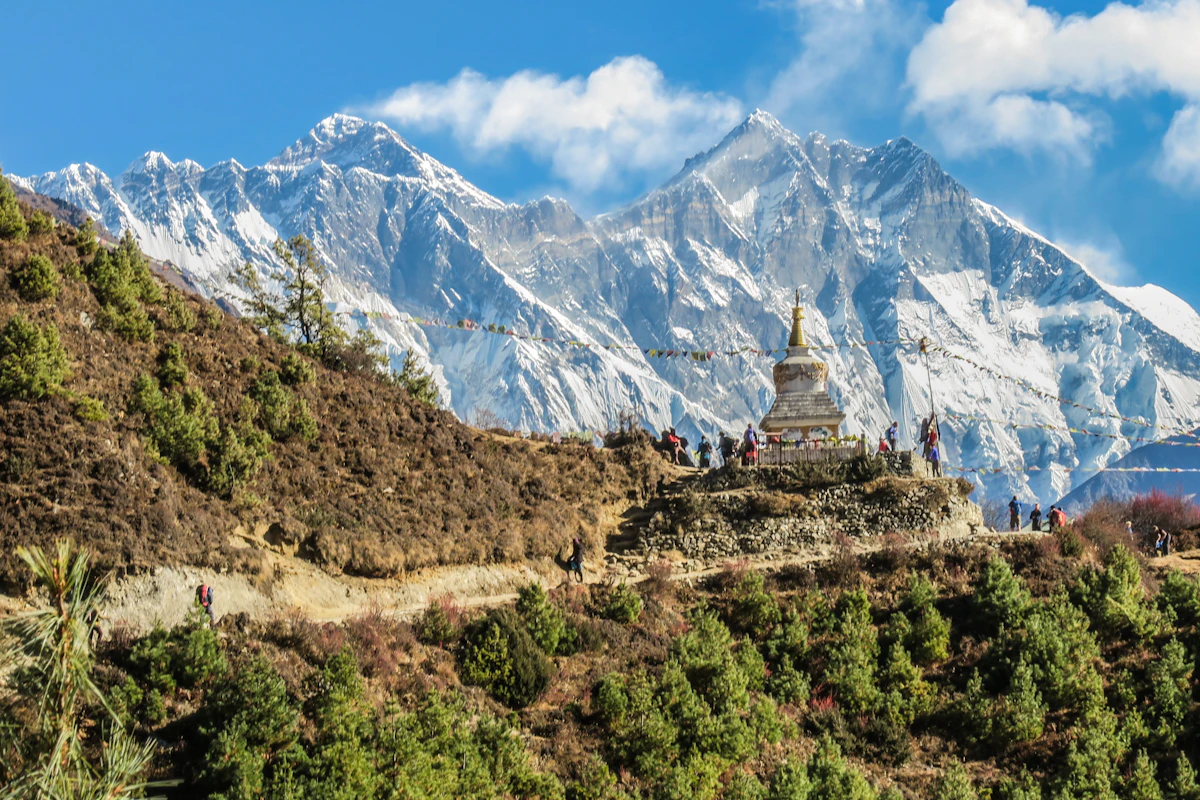
Few geographical markets on Earth present as strong an atmospheric challenge as Nepal. Spanning an altitude elevation from mere 60 meters in the southern Terai plains to the 8,848-meter summit of Mount Everest within a distance of under 150 kilometers, the country has long been vulnerable to devastating cloudbursts, Glacial Lake Outburst Floods (GLOFs), and monsoon-triggered landslides.
On September 23, 2026, Nepal’s meteorological capabilities took a historic technological leap forward. China officially completed the bilateral handover of its modern artificial intelligence weather modeling architecture, known as 'Mazu', to Nepal’s Department of Hydrology and Meteorology (DHM).
Why Traditional Weather Models Failed in the Himalayas
For decades, weather forecasting relied on Numerical Weather Prediction (NWP)—complex mathematical simulations that solve fluid dynamics and thermodynamic equations on massive supercomputing clusters. While NWP works reasonably well across flat plains and oceanic expanses, it struggles severely in steep mountain microclimates:
- Grid Resolution Bottlenecks: Standard global NWP models operate at 9km to 25km grid squares. In the Himalayas, an entire river valley, two mountain ridges, and three microclimates are compressed into a single grid box, leading to catastrophic blind spots during localized torrential rainfall.
- Compute Latency: Running multi-parameter physical atmospheric models requires four to six hours of heavy compute time. By the time a forecast was computed, cloudburst events had often already occurred.
Inside 'Mazu': Deep Graph Neural Networks for Meteorology
The Mazu system replaces brute-force differential equations with an ultra-fast, multi-scale Spatial-Temporal Graph Neural Network (GNN) trained on three decades of global reanalysis data and real-time Fengyun meteorological satellite telemetry.
| Performance Metric | Traditional NWP System | Mazu AI Weather Architecture | Real-World Advantage |
|---|---|---|---|
| Forecast Generation Time | 4.5 hours on supercomputer | 42 seconds on local GPU workstation | Instant situational awareness during active storms |
| Spatial Resolution | 9 km to 15 km grid | 1.2 km micro-basin resolution | Precision tracking of localized valley flash floods |
| GLOF Early Warning Window | 30 to 60 minutes | 6 to 12 hours advance prediction | Allows full community evacuations in downstream valleys |
| Hardware Footprint | Multi-million-dollar server room | Standard 4-node GPU rack in Kathmandu | Immense cost reduction and independent operation |
Transforming Disaster Management & Agriculture
The deployment of Mazu represents far more than an academic computing achievement—it directly impacts millions of lives and livelihoods across Nepal:
- Downstream Glacier Alerts: Glacial lakes like Tsho Rolpa and Imja Tsho are under continuous satellite and thermal AI surveillance. Sudden moraine shifts or sub-surface melt surges trigger automated alerts to riverside settlements along the Sun Koshi and Dudh Koshi rivers.
- Precision Farming for Terai Farmers: Rather than broad regional rain probabilities, farmers receive localized 48-hour soil moisture and precipitation forecasts directly on mobile handsets, enabling optimal planting and harvest scheduling.
- Aviation Safety in Mountain Airfields: Mountain airports like Lukla, Jomsom, and Simikot suffer from sudden wind shear and cloud ceiling drops. Mazu generates 30-minute rolling micro-forecasts that substantially reduce aviation risks.
Data Sovereignty & Local Capacity Building
As part of the bilateral agreement, the technical handover includes detailed training for Nepali meteorologists, data scientists, and engineers in Kathmandu. The local installation ensures that all sensitive climate and geographical telemetry remains hosted within Nepal’s domestic servers, giving local scientists full autonomy to fine-tune the AI models with ground-station observations from across the country.
Hardware Acceleration, VRAM Allocations, and Local Deployment Standards
Executing complex machine learning workloads and high-throughput inferencing pipelines requires careful balancing of system memory bandwidth and compute parallelism. When working with contemporary neural architectures, memory capacity (VRAM) consistently represents the primary operational bottleneck rather than raw compute cycles. Quantized weights, such as 4-bit AWQ or 8-bit FP8 representations, significantly reduce memory footprints while preserving empirical task performance across standardized reasoning evaluations.
Key Performance Optimizations and Resource Metrics
- Precision Scaling: Deploying FP8 and INT4 quantization cuts memory bandwidth saturation by up to 52% with minimal degradation in output coherence.
- Context Memory Footprint: Allocating dynamic KV-cache compression prevents out-of-memory kernel panics during long-context document processing.
- Inference Parallelism: Utilizing tensor parallelism across multi-GPU nodes reduces generation latency during concurrent enterprise workloads.
- Thermal Management: Maintaining target GPU junction temperatures below 78 degrees Celsius ensures sustained boost clock frequencies during continuous batch runs.
Practical Recommendations and Key Takeaways
For production deployments, system engineers must prioritize reproducible workflows, active latency monitoring, and strict fallback safety mechanisms. Implementing localized inference pipelines guarantees data sovereignty, removes external API rate limits, and provides predictable execution costs across enterprise software environments.



💬 Reader Discussion & Feedback 0