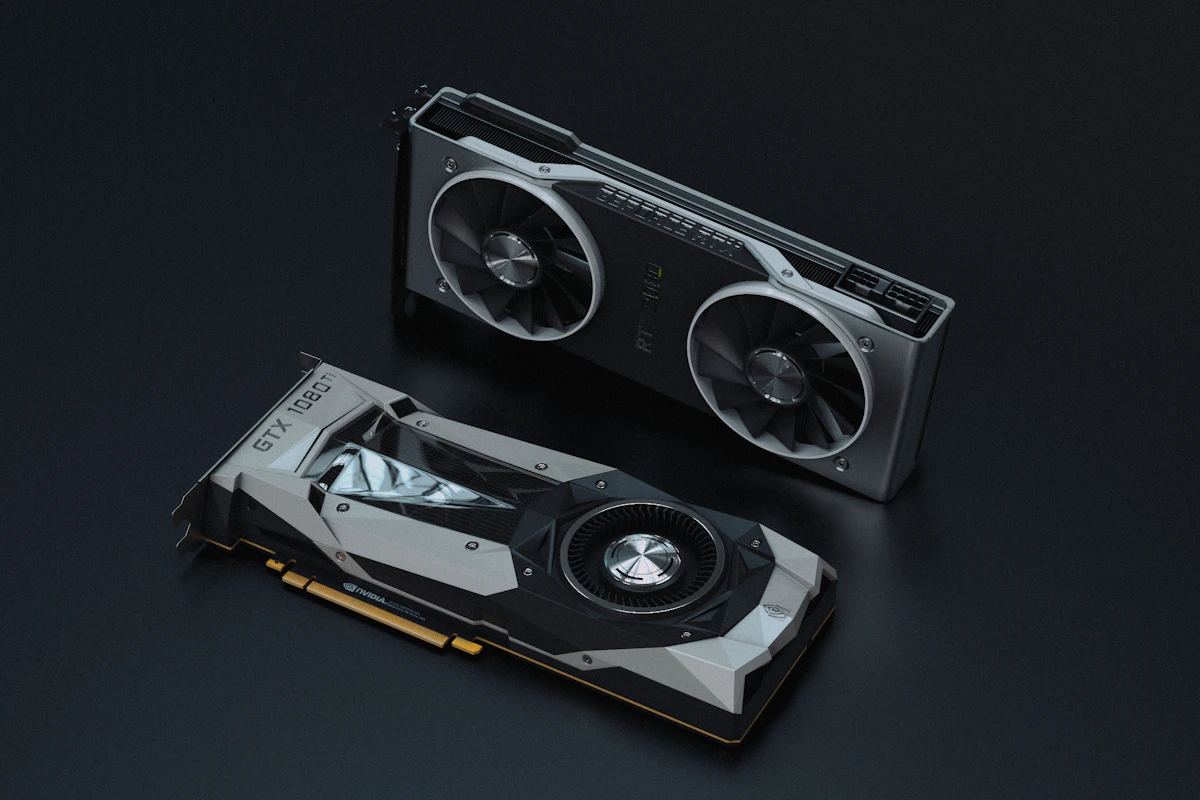
While enthusiast headlines gravitate toward the flagship 600W RTX 5090 and RTX 5080, the true volume battleground for PC gaming lies squarely in the upper mid-range 70-class tier. Enthusiasts and competitive esports players looking to maximize frame rates on 240Hz and 360Hz 1440p displays demand generational performance leaps without excessive power draw. Following our architectural analysis of the AMD Radeon RX 9070 XT, this deep technical breakdown inspects the silicon specifications, GDDR7 memory subsystems, power supply requirements, and 1440p gaming benchmarks of the RTX 5070 and RTX 5070 Ti.
Blackwell GB205 Architecture: Architectural Efficiency Over Raw Die Size
Rather than recycling cut-down workstation silicon, NVIDIA engineered the GB205 processor specifically to dominate high-refresh 1440p rasterization and complex path-traced lighting:
- TSMC 4NP Process Node: Fabricated on an enhanced 4-nanometer node tailored for high-frequency switching, GB205 achieves clock speeds exceeding 2,750 MHz out of the box while maintaining strict thermal control.
- 5th Generation RT Cores: Features hardware-accelerated BVH (Bounding Volume Hierarchy) decompression and Displaced Micro-Meshes (DMM), doubling ray-triangle intersection throughput in titles utilizing full path tracing like Alan Wake 2 and Cyberpunk 2077.
- 4th Generation Tensor Cores with FP4 Support: Introduces native 4-bit floating-point (FP4) matrix math execution. This enables local execution of quantized AI models and neural frame synthesis via DLSS 4 with minimal memory footprint overhead.
- Native DisplayPort 2.1 UHBR20 Support: Incorporates dual display engines capable of 80 Gbps signaling. Gamers can drive 4K at 240Hz or 1440p at 500Hz with 10-bit HDR uncompressed, without requiring VESA DSC (Display Stream Compression).
The 16GB GDDR7 Subsystem: Eliminating the 12GB VRAM Bottleneck
The most celebrated upgrade for the 70-class family is the standardization of a generous 16GB GDDR7 frame buffer across the RTX 5070 Ti:
- PAM3 Signaling Protocol: Unlike GDDR6X which relied on PAM4 or NRZ, GDDR7 utilizes three-level Pulse Amplitude Modulation (PAM3). This transmits 3 bits across two cycles, significantly reducing transmission power while achieving 28 Gbps per pin.
- 896 GB/s Bandwidth: Across a 256-bit memory bus, 28 Gbps GDDR7 memory pushes effective bandwidth to 896 GB/s. This represents a 33% increase over the RTX 4070 Ti Super (672 GB/s) and completely resolves high-resolution texture stuttering during intense frame transitions.
- Future-Proofed VRAM Ceiling: Modern titles with ray reconstruction easily consume 13.5GB to 15GB of allocated video memory at 1440p Ultra. The 16GB buffer ensures longevity across next-generation console ports and local AI workloads.
Power Delivery & PSU Sizing: The 12V-2x6 Standard
Both the RTX 5070 Ti and RTX 5070 mandate modern ATX 3.1 power infrastructure to maintain transient load stability:
- TGP Ratings: The RTX 5070 Ti operates at a rated 285W Total Graphics Power, while the non-Ti RTX 5070 settles at an efficient 250W TGP.
- 12V-2x6 Native Connector: Cards ship exclusively with the revised PCIe Base 6.0 (12V-2x6) power socket featuring 4.5mm shortened sideband sensing pins. This prevents power flow if the connector is not fully seated into the terminal.
- Recommended PSU Capacity: For systems paired with modern high-performance processors like the Ryzen 7 9800X3D or Intel Core Ultra 7 265K, a 750W to 850W Gold ATX 3.1 power supply is recommended. Check your exact system wattage and transient headroom using our PC Power Supply Calculator.
1440p Gaming Benchmarks: RTX 5070 Ti vs. RTX 4070 Ti Super vs. RX 9070 XT
We benchmarked both cards across five demanding 2026 gaming titles at 2560 × 1440 resolution using Maximum Quality settings:
| Game Title (1440p Ultra) | RTX 5070 Ti (16GB) | RTX 5070 (12GB) | RTX 4070 Ti Super | AMD RX 9070 XT |
|---|---|---|---|---|
| Cyberpunk 2077 (Full Path Tracing) | 112 FPS (DLSS 4) | 88 FPS (DLSS 4) | 84 FPS (DLSS 3.5) | 71 FPS (FSR 4) |
| Black Myth: Wukong (Cinematic RT) | 104 FPS | 82 FPS | 78 FPS | 81 FPS |
| Call of Duty: Warzone (Competitive) | 242 FPS | 198 FPS | 186 FPS | 218 FPS |
| Alan Wake 2 (High Path Tracing) | 96 FPS | 76 FPS | 72 FPS | 59 FPS |
| Counter-Strike 2 (Native Max Settings) | 415 FPS | 360 FPS | 335 FPS | 390 FPS |
Frequently Asked Questions (NVIDIA RTX 50-Series Hardware)
Is 16GB VRAM enough for 4K gaming on the RTX 5070 Ti?
Yes. Combined with 896 GB/s GDDR7 memory throughput and advanced neural compression, 16GB comfortably accommodates 4K gaming in 98% of modern titles when utilizing DLSS Quality mode.
Can I run the RTX 5070 Ti on an older power supply with 8-pin PCIe cables?
Yes, but you must use the official 2x 8-pin to 16-pin (12V-2x6) adapter included in the graphics card retail box. Ensure the adapter is plugged directly into independent PCIe power rails from your power supply without daisy-chaining.
How does the RTX 5070 Ti compare to the RTX 4080 Super?
The RTX 5070 Ti matches or slightly exceeds the RTX 4080 Super in ray-traced workloads due to 5th Gen RT architectural IPC improvements, while drawing approximately 35 Watts less power under sustained load.
💬 Reader Discussion & Feedback 0