The Clandestine Factory Floor of GPU Disassembly
Over the past several weeks, industrial footage and supply chain telemetry emerging from electronics manufacturing hubs in Shenzhen, Dongguan, and Guangzhou revealed an astonishing operation: brand-new retail boxes of consumer GeForce RTX 5090 graphics cards from ASUS, MSI, Gigabyte, and Colorful stacked ceiling-high, only to be systematically opened, disassembled, and stripped down to bare silicon.
Specialized technicians armed with computerized infrared BGA (Ball Grid Array) rework stations heat the massive custom PCBs, desoldering the flagship GB202-300 Blackwell GPU die and all 16 high-speed GDDR7 memory modules. Within hours, the pristine triple-fan vapor-chamber coolers and retail circuit boards are discarded or sold for scrap, while the bare silicon is re-balled with leaded solder spheres and mounted onto custom-fabricated, dual-slot green PCBs equipped with high-RPM turbofan blower coolers.
This aggressive hardware modification boom represents a direct response to tightening United States Department of Commerce export controls. Under the revised 2024–2026 Bureau of Industry and Security (BIS) export regulations, high-performance data center accelerators like the NVIDIA H100, H200, B100, and B200 are strictly banned from shipment to Chinese entities. However, consumer hardware continues to flow through gray-market channels, Southeast Asian distributors, and third-party logistics firms. Chinese AI startups, compute clusters, and private data centers have created a multi-billion-dollar underground industry turning consumer gaming flagships into enterprise-ready rackmount compute cards.
Why Standard Retail RTX 5090 Cards Cannot Fit AI Server Racks
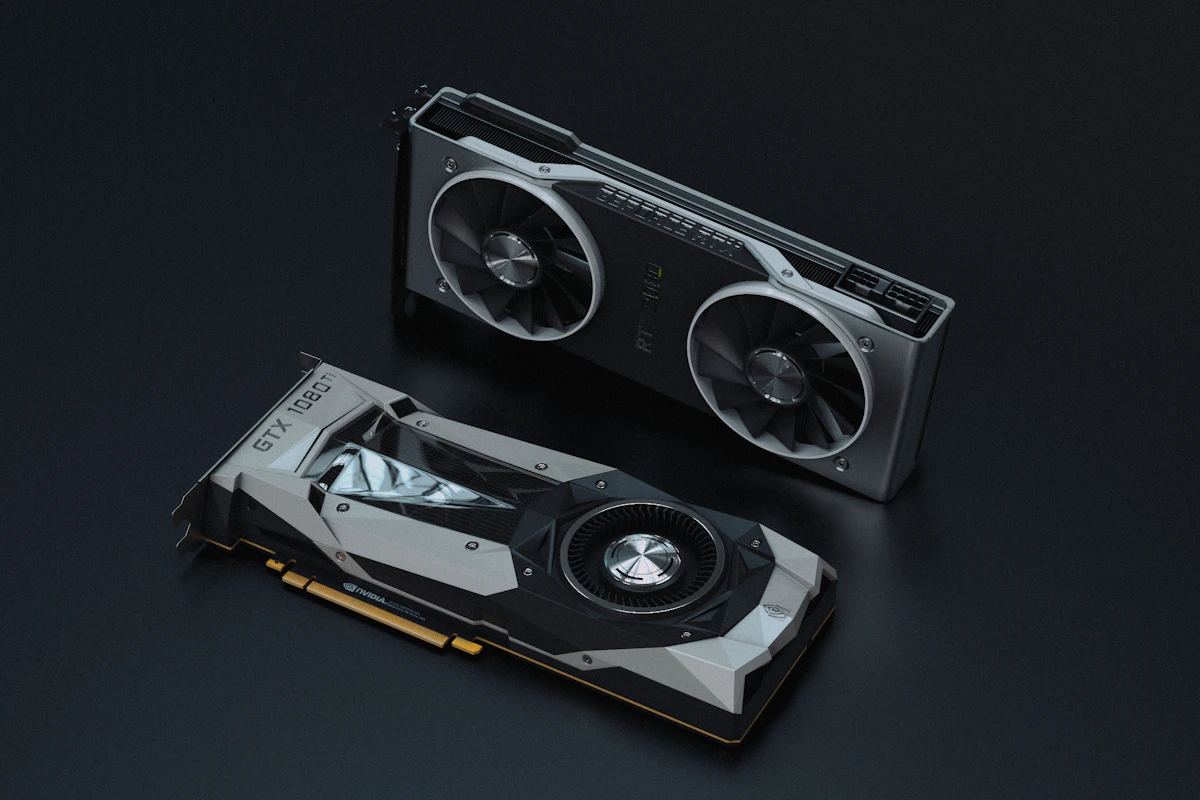
A standard consumer RTX 5090 is an engineering behemoth. Designed for high-end boutique desktop PC cases, retail cards occupy 3.5 to 4 PCIe expansion slots and measure between 330mm and 360mm in length. Their thermal solutions rely on axial flow-through cooling, expelling scorching heat directly inside the chassis.
In high-density data centers, server chassis follow rigid EIA-310 19-inch rack standards. Standard 4U and 8U server enclosures cannot accommodate 4-slot consumer cards:
- Spacing Constraints: High-density PCIe backplanes feature slot spacing of exactly two PCIe slots (40.64mm). A 3.5-slot retail card blocks adjacent PCIe 5.0 slots, reducing an 8-GPU server capacity down to two or three cards.
- Airflow Inversion: Axial consumer fans recirculate air inside the case. Enterprise servers pull cool ambient air from the cold aisle at the front and exhaust it out the rear hot aisle. Only lateral blower fans create the static pressure required to push air through dense copper heatsink fins.
- Power Connector Routing: Retail cards place the 12V-2x6 power connector on the top edge, colliding directly with rackmount server lid covers. Custom blower PCBs move power connectors to the rear edge, matching standard server cabling.
Technical Specifications: Retail vs. Blower Conversion
The table below outlines the structural and electrical differences between an out-of-the-box retail RTX 5090 and its post-conversion data center variant:
| Specification | Retail GeForce RTX 5090 | Converted Blower-Style Server Model |
|---|---|---|
| GPU Silicon | NVIDIA GB202-300 (Blackwell 4NP) | Harvested GB202-300 (Re-balled) |
| VRAM Configuration | 32GB GDDR7 (512-bit bus, 28 Gbps) | 32GB GDDR7 (Retained, re-routed) |
| Form Factor | 3.5 – 4.0 PCIe Slots (Axial Triple Fan) | Strict 2.0 PCIe Slots (Rear Exhaust Blower) |
| Card Length | 336mm – 358mm | 267mm (Standard Server FHFL Spec) |
| Power Delivery | Single/Dual 12V-2x6 on Top Edge | Dual 8-pin EPS or Rear-facing 12V-2x6 |
| vBIOS & Drivers | NVIDIA Game Ready / Studio vBIOS | Modified Enterprise vBIOS (Unlocked TGP) |
| Server Rack Density | Max 2 GPUs per 4U Chassis | Full 8 GPUs per 4U Chassis |
The Solder Re-Balling & Custom PCB Engineering
Transplanting modern BGA processors with over 24,000 solder contact pads is one of the most demanding manufacturing feats in microelectronics. The GB202 processor features micro-pitch solder balls with an interconnect pitch under 0.8mm.
"Stripping a Blackwell die requires precise thermal profiling. A thermal overshoot of just 8 degrees Celsius during infrared pre-heating can delaminate the silicon interposer or shatter the substrate vias. Facilities running these conversion lines operate industrial-grade automated optical inspection (AOI) machines and laser-guided solder stencil printers."
The newly fabricated circuit boards are built with heavy 14-layer server-grade FR4 copper substrates designed to endure continuous 24/7 high-temperature operation at 85°C. To satisfy enterprise Linux environments, custom vBIOS chips are flashed to configure the card for headless compute mode, eliminating unnecessary display port handshakes and enabling clean multi-GPU peer-to-peer memory transfers.
Geopolitical Fallout and Export Enforcement
The widespread conversion of consumer graphics hardware exposes the inherent challenges of silicon export enforcement. Because consumer GPUs are sold through millions of retail, e-commerce, and distribution storefronts worldwide, tracking diverted hardware requires auditing endless multi-hop intermediaries across the Middle East, Central Asia, and Southeast Asia.
NVIDIA has reiterated that it adheres strictly to all United States export regulations and does not sell modified hardware to embargoed entities. However, once retail products reach consumer retail channels, stopping third-party hardware rework facilities remains virtually impossible through software alone. As global demand for AI training and inference continues to outstrip enterprise silicon supply, the clandestine conversion of flagship desktop cards into server compute modules will remain a dominant force shaping the global hardware trade.
Frequently Asked Questions (FAQ)
Can converted blower RTX 5090 cards run standard NVIDIA drivers?
Yes. Because the physical GPU core is an authentic NVIDIA GB202 die, the card registers as an authentic GeForce RTX 5090 in standard Linux distributions and Windows environments, utilizing official driver packages.
Do blower-style converted cards suffer from thermal throttling?
Under continuous 550W peak power draw, a compact dual-slot blower card requires extremely high fan speeds (often exceeding 5,000 RPM) to keep junction temperatures below 88°C. In high-airflow server racks equipped with dedicated 120mm chassis fans pushing 150 CFM, thermal throttling is minimized, but noise levels make them completely unsuitable for home or office desktop use.
Are the original retail warranties preserved after conversion?
No. Desoldering the GPU die and memory modules completely voids all manufacturer warranties. Rework facilities provide their own 30-day to 6-month third-party replacement guarantees directly to data center buyers.
💬 Reader Discussion & Feedback 0