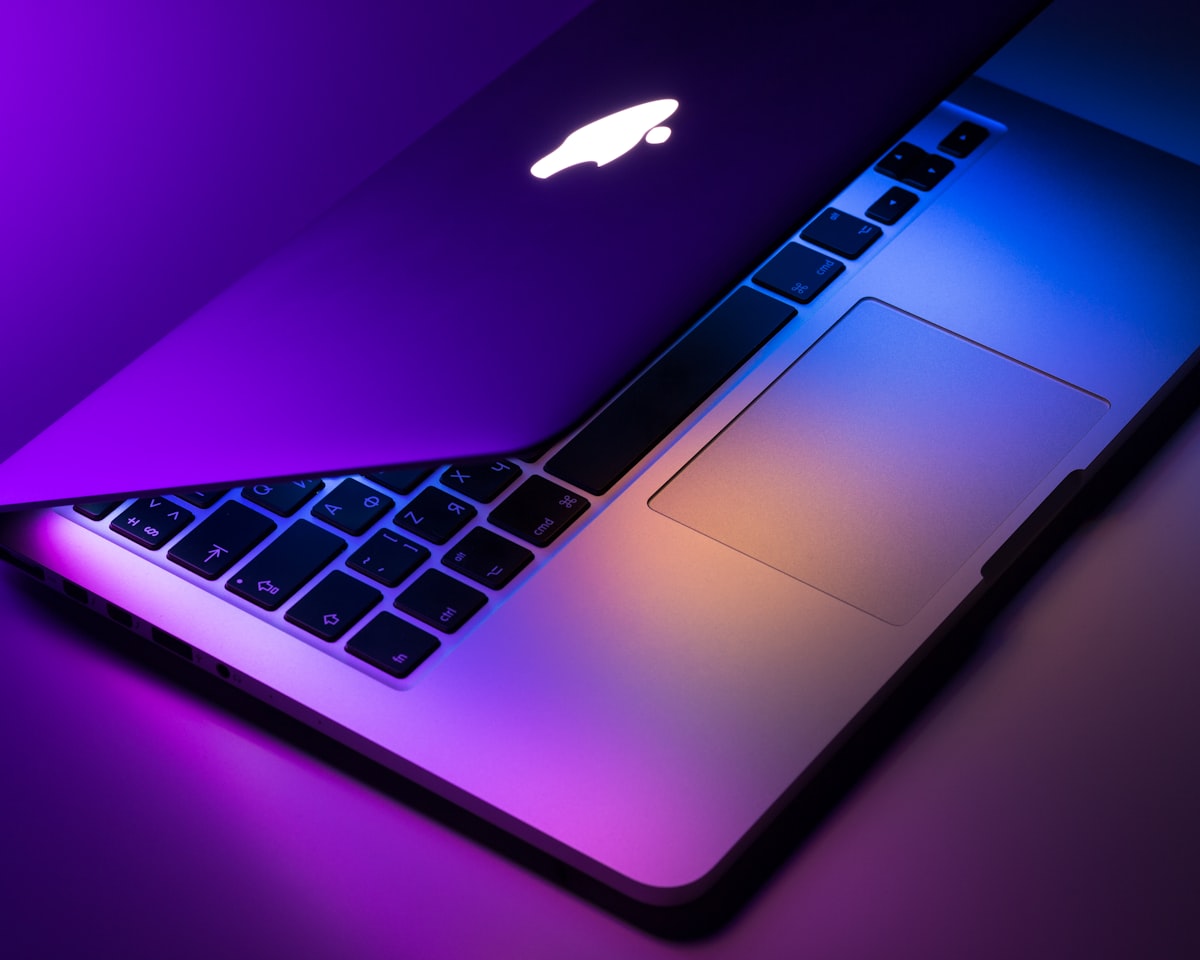
A Historic Reversal: Touchscreens Arrive on the Mac
At an exclusive Los Angeles media gathering titled "Pro and Tell" on October 28, 2026, Apple rewrote its hardware roadmap. For over a decade, company executives famously dismissed the concept of a touchscreen laptop, arguing that vertical touch interfaces produced arm fatigue. However, driven by modern creative workflows and the universal ubiquity of gesture control across iOS and iPadOS, Apple officially debuted the M6 OLED Touchscreen MacBook Pro, introducing multi-touch capability directly into macOS Sequoia.
The announcement headlined an aggressive autumn hardware refresh that included the world premiere of the Apple M6 processor family built on TSMC's 2nm foundry node, an upgraded 24-inch 4.5K Retina iMac, and a long-awaited OLED iPad mini powered by the A20 Pro silicon.
Here is an exhaustive technical breakdown of every hardware architecture, silicon metric, and display innovation revealed during Apple's showcase.
| Specification / Metric | Apple M5 (2025) | Apple M6 (Oct 2026) | Generational Delta |
|---|---|---|---|
| Semiconductor Fabrication | TSMC 3nm (N3P FinFET) | TSMC 2nm (N2 Nanosheet GAA) | +15% Speed / -30% Power |
| CPU Core Cluster | 10-Core (4P + 6E) | 12-Core (6P + 6E) | +28% Multi-threaded compute |
| GPU Core Architecture | 10-Core RDNA-class Shader | 16-Core Neural Ray Tracing | +35% Raster / +55% RT |
| Unified Memory Bandwidth | 153.6 GB/s LPDDR5X | 184.2 GB/s LPDDR5X-9600 | +20% Throughput |
| Neural Engine (NPU) | 38 TOPS INT8 | 64 TOPS INT8 / FP8 Hybrid | +68% On-Device AI Throughput |
| Wireless Connectivity | Wi-Fi 6E + Bluetooth 5.3 | Wi-Fi 7 (320MHz) + BT 5.4 | 4.8 Gbps Peak Wireless Link |
Apple M6 Architecture: TSMC 2nm Nanosheet Transition
The technological centerpiece of the event is the standard Apple M6 processor. Marking Apple's inaugural deployment of TSMC's 2-nanometer gate-all-around (GAA) nanosheet transistors, the M6 drastically reduces parasitic leakage while cramming over 32 billion transistors into a compact die footprint.
The CPU cluster expands to a balanced 12-core topology comprising six ultra-wide performance cores paired with six high-efficiency cores. IPC (instructions per cycle) increases by 14% on the performance cores thanks to widened execution pipelines, expanded L1 data caches, and a revised branch predictor optimized for compiled language execution.
Graphics rendering sees an even more aggressive overhaul. The 16-core GPU integrates hardware-accelerated mesh shading alongside a second-generation ray-tracing pipeline that leverages dedicated tensor matrix units for neural frame generation. In 3D rendering workflows across Blender 4.5 and real-time gaming benchmarks, the baseline M6 matches the performance of the prior-generation M4 Pro while drawing roughly 40% less total package power.
MacBook Pro 14 & 16-Inch: OLED Touchscreen & Dynamic Island
The redesigned 14-inch and 16-inch MacBook Pro models represent the most substantial mechanical redesign since the 2021 Apple Silicon chassis overhaul:
- Tandem OLED Super Retina XDR Panel: Transitioning away from Mini-LED backlighting, the new MacBook Pro utilizes a dual-stack tandem OLED display. Peak HDR brightness reaches 1,600 nits, with full-screen sustained brightness rated at 1,000 nits. Deep black levels achieve an infinite 2,000,000:1 contrast ratio, permanently eliminating the blooming and haloing artifacts around bright text on dark backgrounds.
- ProMotion Touch & Apple Pencil Hover: The display glass integrates on-cell capacitive touch sensors supporting 10-point multi-touch gesture navigation. Additionally, Apple Pencil Pro users can hold their stylus up to 12mm above the glass to preview brush strokes and scrub timelines with zero screen contact.
- The Death of the Display Notch: Replacing the controversial physical notch, Apple implemented an interactive Dynamic Island at the top of the display. Housing a 12MP Center Stage camera and ambient light sensors, the island expands organically to display background audio controls, timer countdowns, AirDrop transfers, and live terminal compilation indicators.
- Reinforced Friction Hinge: To prevent screen wobble when users tap or drag items on the panel, Apple engineered a dual-cam reinforced hinge mechanism that firms up resistance when the display angle exceeds 90 degrees.
│
[macOS Sequoia Touch Engine] ──> [Reinforced Anti-Wobble Friction Hinge]
iMac 24-Inch Refresh: M6 Power for the Desktop
The all-in-one desktop received an immediate performance boost with the integration of the base M6 processor. Retaining its ultra-thin 11.5mm silhouette, the updated iMac features:
- 4.5K Retina Display with Nano-Texture Option: Users can now configure the 24-inch panel with glare-reducing nano-texture glass, perfect for brightly lit studio environments.
- Universal 24GB Unified Memory Base: Acknowledging the memory requirements of local AI inference models (such as Apple Intelligence 3B models and developer LLMs), Apple raised the baseline memory configuration to 24GB, with configurations expandable up to 48GB.
- Quad Thunderbolt 4 Ports: High-end configurations provide four full-speed Thunderbolt 4 ports capable of driving dual external 6K displays at 60Hz simultaneously.
- Pricing: Starting at $1,499 in seven refreshed anodized colorways with color-matched Magic Keyboard and Mouse peripherals featuring USB-C.
iPad mini OLED: Pocket Powerhouse with A20 Pro
Rounding out the hardware announcements, Apple unveiled the eighth-generation iPad mini, addressing long-standing user requests for premium display technology in a compact form factor:
- 8.5-Inch Super Retina XDR OLED: The compact tablet gains an OLED panel offering true blacks, vibrant HDR playback, and 120Hz ProMotion adaptive refresh rate, completely eliminating the "jelly scrolling" display latency that plagued earlier LCD iterations.
- A20 Pro Chip: Borrowing the flagship silicon from the iPhone 18 Pro series, the A20 Pro delivers desktop-class single-core speeds and hardware ray tracing in a chassis weighing under 300 grams.
- Apple Intelligence Integration: With 12GB of unified RAM standard, the iPad mini executes local text summarization, image generation, and smart Siri audio reasoning fully on-device without cloud latency.
- Pricing: Starting at $699 for 128GB Wi-Fi models.
Industry Analysis & Market Availability
Apple's strategic pivot toward touch-enabled Mac hardware reflects mounting competitive pressure from ARM-based Windows 11 Copilot+ laptops. By uniting touch and pen interaction with the performance per watt of 2nm silicon, Apple bridges the functional gap between macOS and iPadOS without compromising the professional Unix terminal environment relied upon by developers.
Pre-orders for the M6 MacBook Pro lineup, iMac, and OLED iPad mini open on October 30, with worldwide retail store availability scheduled for Friday, November 6, 2026.
- ➔ How to Fix Kernel-Power Event ID 41 (Task 63) in Windows 11: Random PC Restarts & Freezes (2026)
- ➔ How to Fix Windows 11 Search Bar Not Working & SearchIndexer.exe High CPU Usage (2026 Guide)
- ➔ AMD Ryzen AI Max+ 395 (Strix Halo): 16 Zen 5 Cores, 40 CU RDNA 3.5 & 256-bit Unified Memory vs. RTX 4070 Mobile & Apple M4 Max (2026 Breakdown)
- ➔ How to Run Local LLMs on Apple Silicon Mac in 2026: Ollama vs. LM Studio vs. Apple MLX (Speed, Unified Memory & Setup Guide)
💬 Reader Discussion & Feedback 0